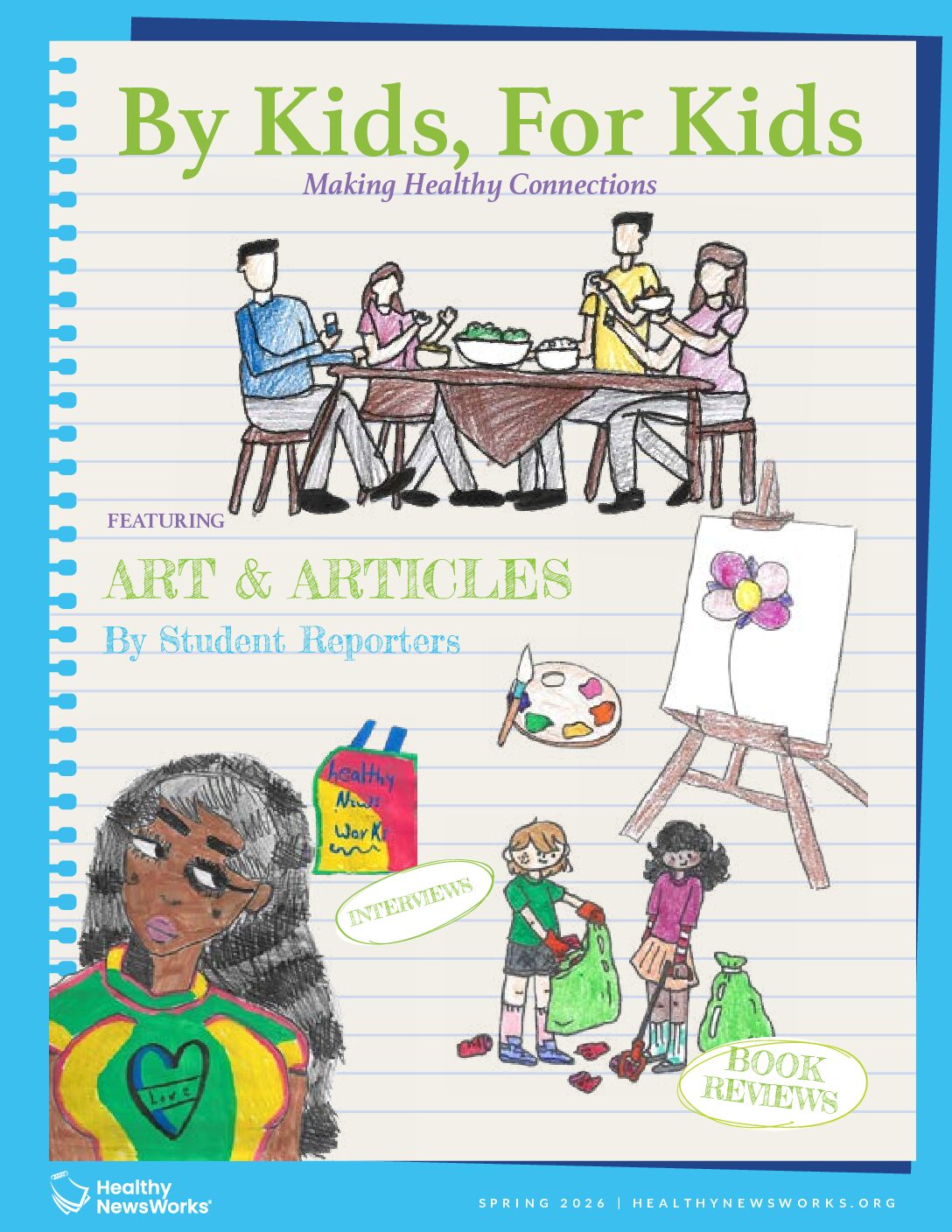
Our 2026 Magazine
For the Spring 2026 edition, reporters wrote about Making Healthy Connections.

Top Stories

Discovering the health benefits of art
By Inquiry Charter Healthy Owl Times reporters | Art is not only beautiful to look at, it also has...

Book review: Love That Dog
Reviewed by Cole Manor Fit Falcon Tribune reporters Love That DogWritten by Sharon Creech Love...

Book review: The Invisible Boy
Reviewed by Eleanor Emlen Healthy Roar reporters The Invisible BoyWritten by Trudy Ludwig The...

Book review: Game Changers: The Story of Venus and Serena Williams
Reviewed by Henry Healthy Hawk reporters Game Changers: The Story of Venus and Serena...

Book review: Chicks and Salsa
Reviewed by MaST Healthy Panther Post cub reporters Chicks and SalsaWritten by Aaron Reynolds This...

Book review: Can I Join Your Club?
Reviewed by DePaul Healthy Trailblazer Journal reporters Can I Join Your Club?Written by...

Book review: The Boy with Big, Big Feelings
Reviewed by DePaul Healthy Trailblazer Journal reporters The Boy with Big, Big FeelingsWritten by...

Book review: The Big Beach Cleanup
Reviewed by Alexander Adaire Fit Fish reporters The Big Beach CleanupWritten by Charlotte Offsay...
Kids Blog

Fruits are delicious
By Gurtej, MaST Community Charter School Healthy Panther Post Cub Reporter | I like to eat fruit...

Dream garden III
By Jordyn, La Salle Healthy News | If I had my own garden, I would grow lots of vegetables and...
Food reflection
By Aiden, James Lowell Healthy Lion reporter | Food can connect people like family and friends. It...

Lessons in humor II
By Aimana, MaST Community Charter School Healthy Panther Post | I thought that the...

Favorite meal II
By Azuri, Eleanor Emlen Healthy Roar | My favorite meal is from McDonald’s. I got a cheeseburger...

Grateful for…
By Peyton, DePaul Healthy Trailblazer Journal | Someone I'm connected to is my mom. I connected...

Favorite book IV
By Mia, Cole Manor Fit Falcon Tribune | Click, Clack, Moo: Cows that Type by Doreen Cronin is...

Dealing with anxiety II
By Albert, Chester Charter Scholars Academy Healthy Highlights | I experienced anxiety during my...
Did You Know?
Why is it important to balance screen time?
Screens can help us learn, connect with friends, and have fun, but too much screen time can make it harder to be active, sleep well, and focus. Creating healthy screen habits helps kids take care of both their minds and bodies.
Source: American Academy of Pediatrics (HealthyChildren.org)
How can screens affect sleep?
Using screens right before bed can make it harder to fall asleep. The light from phones, tablets, and computers can interfere with the body’s natural sleep cycle. Turning off screens before bedtime can help kids get the rest they need to learn, grow, and feel their best.
What are some healthy tech habits?
Healthy tech habits include taking breaks from screens, spending time outdoors, being active every day, and using technology in ways that help you learn and connect with others. Experts recommend creating screen-free times, such as during meals or before bedtime, to help maintain a healthy balance.
Source: American Academy of Pediatrics (HealthyChildren.org)
Talking To …

Dr. Ken Ginsburg
Next time you see someone who is acting out or saying something mean, ask yourself: Are they having a bad day? Is something going wrong in their life? They may need your empathy. That means looking beyond what they are doing and trying to understand what they may be feeling. “Someone’s behavior or words in the moment may not be a reflection or picture of who they really are,” says Dr. Ken Ginsburg, a pediatrician at Children’s Hospital of Philadelphia.

Kambel Smith
Lonnie Smith and his son Kambel once had a tumultuous relationship. When Kambel was a boy, Lonnie said, he couldn’t understand him very well. Kambel was not speaking clearly, but he was expressing a lot of anger. Kambel had been diagnosed with autism, and Lonnie didn’t know how to communicate with him. It was as if there was a wall between them, he said, until Lonnie discovered his son’s talent for art—by accident.
Student Gallery
These illustrations are by students at Yorkship Family School in Camden and MaST Community Charter School and Alexander Adaire School in Philadelphia.

Game
See how much you know about reporting and health by playing this interactive game.

Want to write or illustrate for By Kids, For Kids?
If you’re a student in elementary or middle school, we’ve got an assignment for you. Ask a parent or guardian to click below for more information.