By East Norriton Bulldog Bulletin reporters | Erica Walker was pursuing a career as an artist when noisy neighbors on the floor above her apartment led to a dramatic switch. She’s now Dr. Erica Walker, still an artist but also an expert on the study of noise pollution and its effects on people.
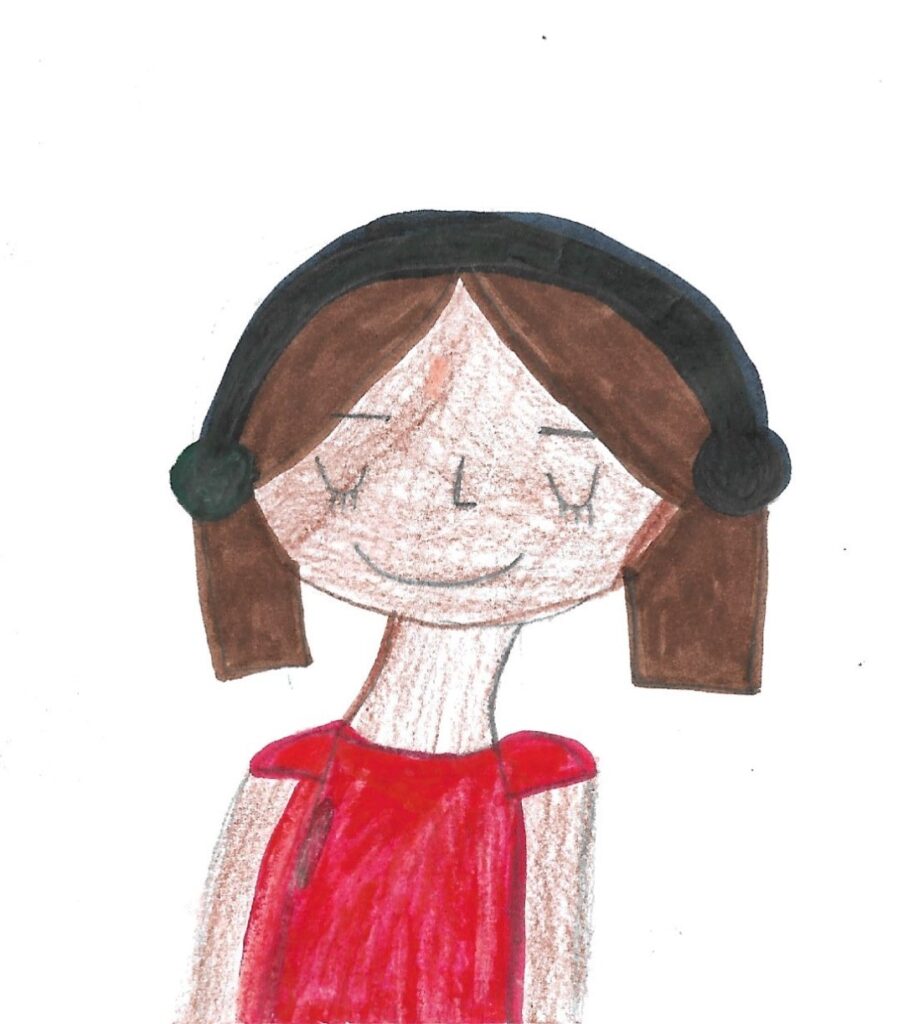
Dr. Walker is an assistant professor of epidemiology at Brown University and the creator of the Community Noise Lab, where she conducts her studies. She recently spoke about noise and noise pollution with East Norriton Bulldog Bulletin reporters.
According to Dr. Walker, noise pollution is “unwanted sound, sounds that we process as harmful or stressful,” such as car horns blaring or barking dogs.
Noise pollution isn’t good for our hearing and our physical and mental health, she says. “Imagine someone coming into your community and playing sounds you don’t like at levels you find annoying. Imagine having very little ability to find peace. It’s like when you blast your headphones at full volume,” she says.
She contrasts unwanted noise with sounds we like to hear. “We like to hear our friends at lunch. We like to listen to our favorite music. We like to watch our favorite television,” Dr. Walker says. “So those are sounds that we enjoy.”
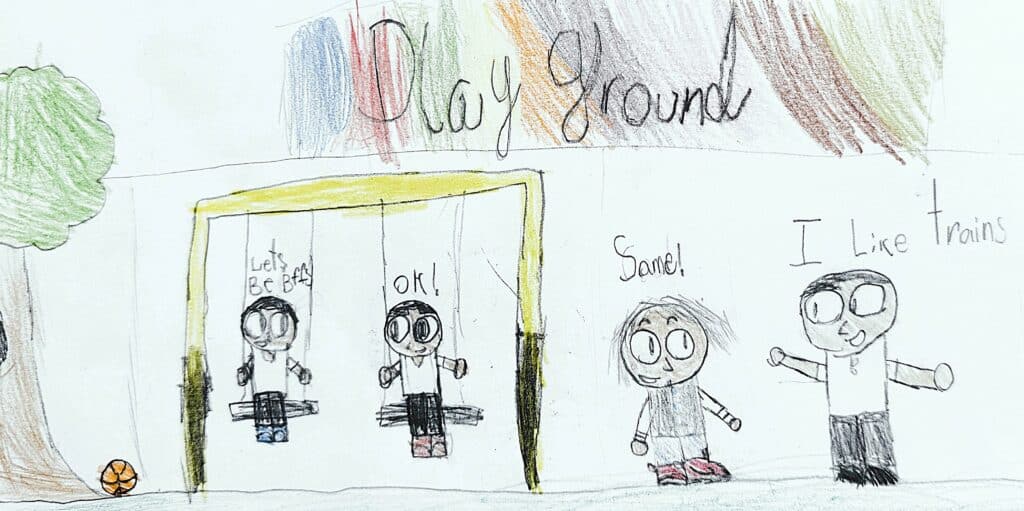
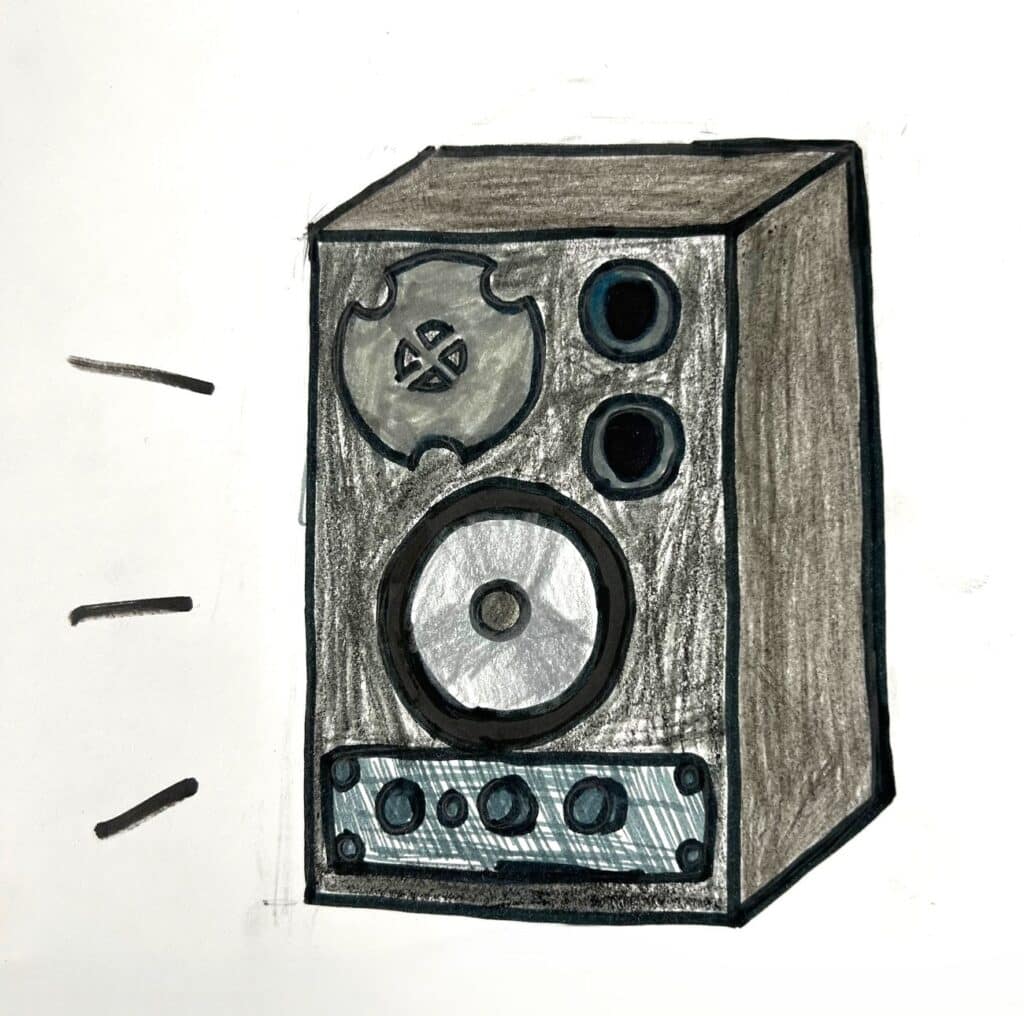
Illustration by Lexus, fourth grade
Dr. Walker didn’t always want to study noise pollution. She planned to be an artist. But her parents never wanted her to be an artist. They encouraged her to study math and science. So she did, but she still started out after graduation as an artist—until that noisy apartment made her curious about whether the noise was affecting her health.
Dr. Walker earned a doctorate in public health and has done a lot of work over the years investigating the effects of noise on health. In 2018, she founded the Community Noise Lab. This group looks at health aspects of community noise, from car horns to fireworks or gunshots. “I’m just trying to think of so many issues that we see,” says Dr. Walker. She says it’s important to study them because noise pollution affects our mental and physical health.
“It’s stressful to be waking up in the middle of the night when you’re trying to get a really nice sleep. And because you’re trying to figure out what that noise was, that can also be stressful,” says Dr. Walker. “That stress response is the same kind of response that you would have if you were walking in a dark alleyway and out jumps a ferocious dog trying to chase you.”
Along with mental health impacts, Dr.Walker says very loud sounds can lead to hearing loss. Recent statistics aren’t available, but a report in 1980 said nearly a third of the U.S. population was exposed to harmful noise levels. Today, Dr. Walker says, that figure is probably higher. For kids and teens, she says, the biggest danger to hearing loss is playing personal devices too loud. “You may like watching or playing your video games at really high levels,” she says. “You may not think that it’s noise, but those kinds of sounds at those levels can really impact your hearing loss.”
Illustration by Vivian, eighth grade
There are some very simple things we can do to help, she says. When teachers ask you to be quiet, you should be. It might not seem like a big deal, but loud noise in the classroom might hurt your ears or cause you stress, even if you don’t realize it.
“I try to control my environment through things like listening to soothing music,” Dr. Walker says. She also says she sometimes uses a white noise machine in her home or noise-canceling headphones or earplugs when she is out where there may be a lot of noise. “I can’t control people. I can’t go up to people and tell them to shut up or turn the volume down,” says Dr. Walker, “but I can control my space.”
And Dr. Walker is still an artist. She makes books, furniture, pottery, and paintings. “I love art,” she explains. “If it’s something you like to do, it relieves stress. It’s something I always like to do, no matter how busy I get in my full-time job.”
—Vivian, Zuri, and Ania, East Norriton Bulldog Bulletin
Read more on pages 12-13 in our Fall magazine.